 Image 1 of 1
Behind the Craft…
A little piece of history, made for everyday living.
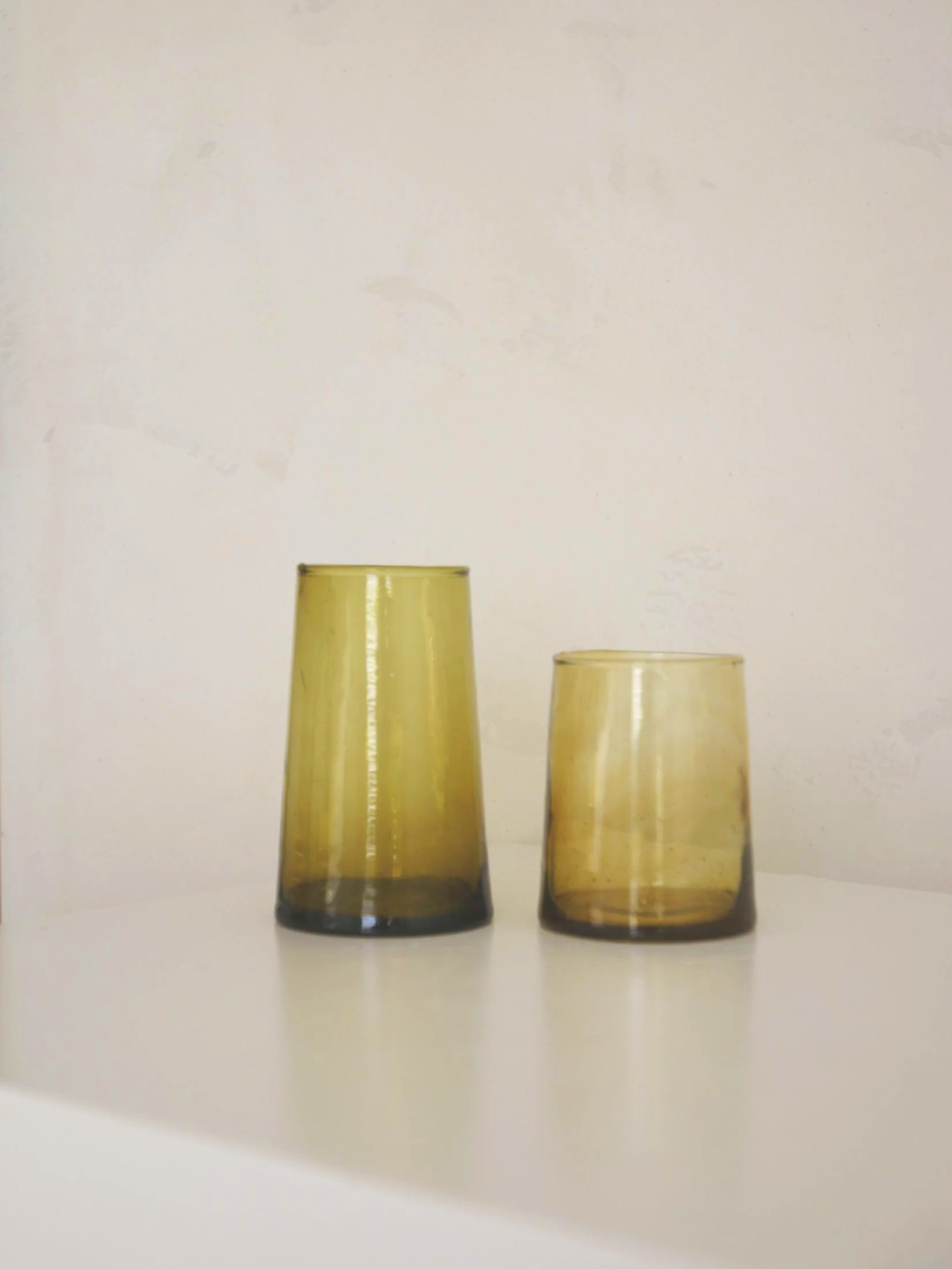
Since the 1940s, these beautiful handblown glasses have been part of everyday life in Morocco, found in family homes, bustling cafés and around tables shared with friends. But in 2013, this much-loved tradition almost disappeared when Morocco's last factory producing the iconic glasses closed its doors. Determined not to lose generations of craftsmanship, a group in Marrakech brought the tradition back to life, reopening production and bringing skilled glassblowers together to continue their craft. Today, these glasses are still made using traditional techniques and recycled glass. Discarded bottles and glass are melted down and carefully blown by hand into something beautiful and useful once again.
No two are exactly alike. Tiny bubbles, gentle ripples and subtle variations are reminders of the hands that shaped them, giving each glass its own character.
Originally created for serving Moroccan tea, they're just as lovely for morning juice, water at the dinner table or a glass of wine in the evening. A beautiful reminder that the simplest everyday objects often have the most interesting stories.
-
Handblown in Morocco
Made from recycled glass
Capacity: 500ml
Height: 13cm
-
Dishwasher safe on a gentle glass setting